

As energy costs continue to rise and environmental regulations become stricter, organizations are increasingly adopting structured energy management practices. An ISO 50001 Audit is one of the most important steps in ensuring that an organization's Energy Management System (EnMS) is effective, compliant, and continuously improving.
Whether your organization is preparing for ISO 50001 certification or maintaining an existing Energy Management System, regular audits help identify opportunities for improvement, reduce energy waste, and enhance operational efficiency.
In this guide, you'll learn the full form of ISO 50001, what is the purpose of ISO 50001, how to implement ISO 50001, the role of ISO 50001 Gap Analysis, and the importance of an ISO 50001 compliance checklist and ISO 50001 internal audit checklist.
What is the Full Form of ISO 50001?
The full form of ISO 50001 is the International Organization for Standardization – Energy Management Systems (EnMS) – Requirements with Guidance for Use.
ISO 50001 is an internationally recognized standard that provides organizations with a systematic framework to establish, implement, maintain, and continually improve their Energy Management System (EnMS). The standard helps organizations improve energy performance, reduce energy consumption, lower operational costs, and support environmental sustainability.
What is ISO 50001 Energy Management System?
The ISO 50001 Energy Management System (EnMS) is a structured management framework that enables organizations to monitor, measure, analyze, and improve their energy performance.
Instead of focusing only on reducing electricity bills, ISO 50001 helps businesses manage all forms of energy, including electricity, natural gas, fuel, steam, compressed air, and renewable energy sources.
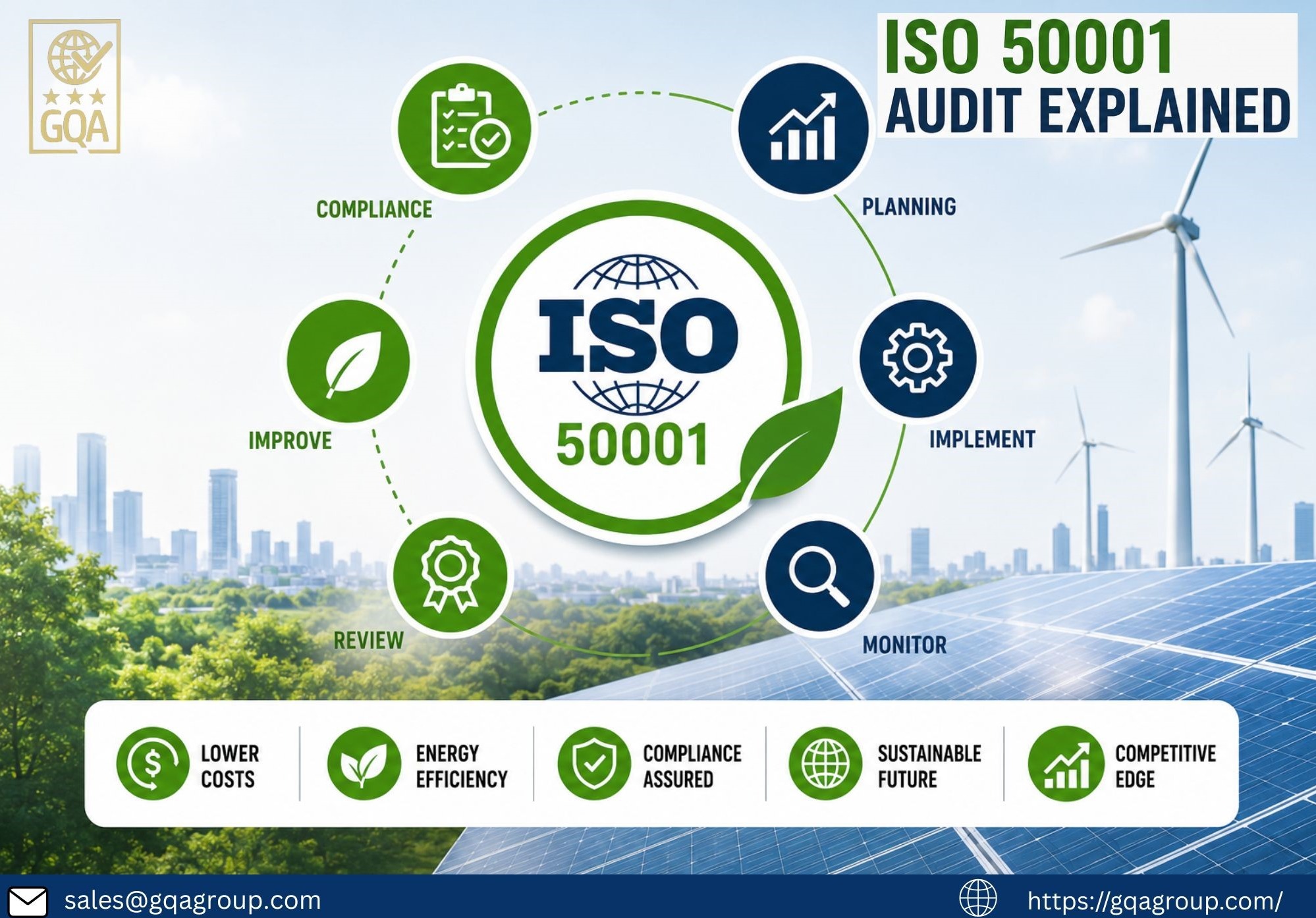
The system is based on the internationally accepted Plan-Do-Check-Act (PDCA) cycle, ensuring continual improvement in energy efficiency.
Organizations from manufacturing, healthcare, food processing, logistics, hospitality, educational institutions, and commercial buildings can all benefit from implementing an effective Energy Management System.
What is the Purpose of ISO 50001?
Many businesses ask, what is the purpose of ISO 50001?
The primary purpose of ISO 50001 is to help organizations systematically improve energy performance while reducing costs and environmental impact.
The standard aims to:
- Improve energy efficiency
- Reduce energy consumption
- Lower operational costs
- Reduce greenhouse gas emissions
- Improve equipment performance
- Support sustainability initiatives
- Meet legal and regulatory requirements
- Strengthen business competitiveness
- Promote continual improvement
Rather than relying on one-time energy-saving initiatives, ISO 50001 creates a long-term management approach that delivers measurable and sustainable results.
What is an ISO 50001 Audit?
An ISO 50001 Audit is a systematic evaluation of an organization's Energy Management System to verify that it complies with the requirements of ISO 50001.
The audit determines whether the EnMS has been effectively implemented and whether it is achieving the organization's energy objectives.
Audits generally include:
- Review of documented information
- Evaluation of energy performance
- Verification of legal compliance
- Inspection of operational controls
- Employee interviews
- Review of monitoring records
- Verification of energy objectives
- Assessment of continual improvement activities
Regular audits help organizations identify nonconformities before they become major issues.
How to Implement ISO 50001
Organizations often wonder how to implement ISO 50001 successfully. The implementation process involves careful planning, employee involvement, and continual monitoring.
Step 1: Obtain Management Commitment
Top management should establish an energy policy and allocate the necessary resources for implementation.
Step 2: Conduct an Energy Review
Analyze current energy consumption and identify significant energy uses across the organization.
Step 3: Perform ISO 50001 Gap Analysis
A detailed ISO 50001 Gap Analysis compares existing energy management practices with the requirements of the ISO 50001 standard.
This assessment identifies areas requiring improvement before implementation begins.
Step 4: Develop Documentation
Prepare all required policies, procedures, records, operational controls, and monitoring documents.
Step 5: Train Employees
Employees should understand their responsibilities and receive appropriate awareness and competency training related to energy management.
Step 6: Implement Operational Controls
Introduce procedures that improve energy efficiency and reduce unnecessary consumption.
Step 7: Monitor Energy Performance
Measure energy consumption using Energy Performance Indicators (EnPIs) and compare results against established objectives.
Step 8: Conduct Internal Audit
Verify that the system complies with ISO 50001 requirements before the certification audit.
Step 9: Certification Audit
An accredited certification body evaluates the Energy Management System and awards certification if all requirements are met.
Importance of ISO 50001 Gap Analysis
An ISO 50001 Gap Analysis is one of the most valuable tools during implementation.
It helps organizations:
- Understand current compliance status
- Identify documentation gaps
- Improve operational controls
- Reduce certification delays
- Minimize implementation costs
- Prioritize corrective actions
- Prepare for certification audits
Performing a gap analysis early significantly increases the likelihood of successful certification.
ISO 50001 Compliance Checklist
An ISO 50001 compliance checklist helps organizations verify that all standard requirements have been addressed.
Typical checklist items include:
- Energy Policy established
- Energy objectives defined
- Energy review completed
- Significant energy uses identified
- Energy baseline established
- Energy Performance Indicators (EnPIs) developed
- Operational controls implemented
- Monitoring and measurement procedures available
- Legal requirements identified
- Employee training completed
- Internal audits conducted
- Management review completed
- Corrective actions implemented
- Continual improvement process established
Using a compliance checklist ensures that no critical requirement is overlooked before certification.
ISO 50001 Internal Audit Checklist
An ISO 50001 internal audit checklist provides auditors with a structured approach to evaluating the effectiveness of the Energy Management System.
Common audit points include:
- Is the Energy Policy communicated to employees?
- Are energy objectives measurable?
- Are energy performance indicators monitored?
- Are significant energy uses regularly reviewed?
- Are operational controls implemented effectively?
- Are monitoring records maintained?
- Are employees competent for their assigned roles?
- Are calibration records available?
- Are corrective actions completed?
- Has management conducted periodic reviews?
- Is continual improvement demonstrated?
Regular internal audits help organizations maintain compliance and improve overall energy performance.
Why Choose GQA Group?
Implementing ISO 50001 and preparing for audits requires technical expertise and practical experience. GQA Group provides professional consulting services to support organizations throughout the certification journey.
Their services include:
- ISO 50001 Gap Analysis
- Documentation Support
- Energy Management System Implementation
- Internal Audit Assistance
- Employee Training
- Certification Coordination
- Compliance Support
- Continuous Improvement Guidance
With experienced consultants and a practical implementation approach, GQA Group helps organizations achieve ISO 50001 certification efficiently while improving long-term energy performance.
Learn more about their services at https://www.gqagroup.com/.
Conclusion
An effective ISO 50001 Audit is essential for maintaining an efficient Energy Management System and ensuring continual improvement. By implementing ISO 50001 correctly, conducting regular gap analyses, using compliance and internal audit checklists, and monitoring energy performance, organizations can reduce operating costs, improve sustainability, and strengthen their market reputation.
ISO 50001 is more than a certification it is a strategic approach to managing energy responsibly and achieving long-term operational excellence.
Frequently Asked Questions (FAQs)
1. What is an ISO 50001 Audit?
An ISO 50001 Audit is a systematic evaluation of an organization's Energy Management System (EnMS) to verify compliance with ISO 50001 requirements and identify opportunities for continual improvement.
2. What is the purpose of ISO 50001?
The purpose of ISO 50001 is to help organizations improve energy performance, reduce energy consumption, lower operational costs, and minimize environmental impact through a structured Energy Management System.
3. How do you implement ISO 50001?
Implementation involves obtaining management commitment, conducting an energy review, performing a gap analysis, preparing documentation, training employees, implementing operational controls, conducting internal audits, and completing a certification audit.
4. What is included in an ISO 50001 compliance checklist?
A compliance checklist typically includes the energy policy, objectives, energy review, EnPIs, operational controls, legal compliance, monitoring records, internal audits, management reviews, and corrective actions.
5. Why is an ISO 50001 internal audit important?
An internal audit helps organizations verify compliance, identify nonconformities, improve energy performance, prepare for certification audits, and ensure continual improvement of the Energy Management System.