

Expanding your business into the European market is a major milestone for any manufacturer. However, before many products can be legally sold in the European Economic Area (EEA), they must comply with European safety, health, and environmental regulations. This is where CE Certification becomes essential.
Whether you manufacture electrical equipment, machinery, medical devices, toys, construction products, or electronic goods, obtaining CE Certification demonstrates that your product meets the applicable European Union (EU) directives and regulations. It also builds trust among customers, distributors, and regulatory authorities.
In this guide, we'll explain how to get CE Certification, the CE Certification process, documentation requirements, costs, and why working with a professional CE Certification Consultant India can simplify your compliance journey.
What is CE Certification?
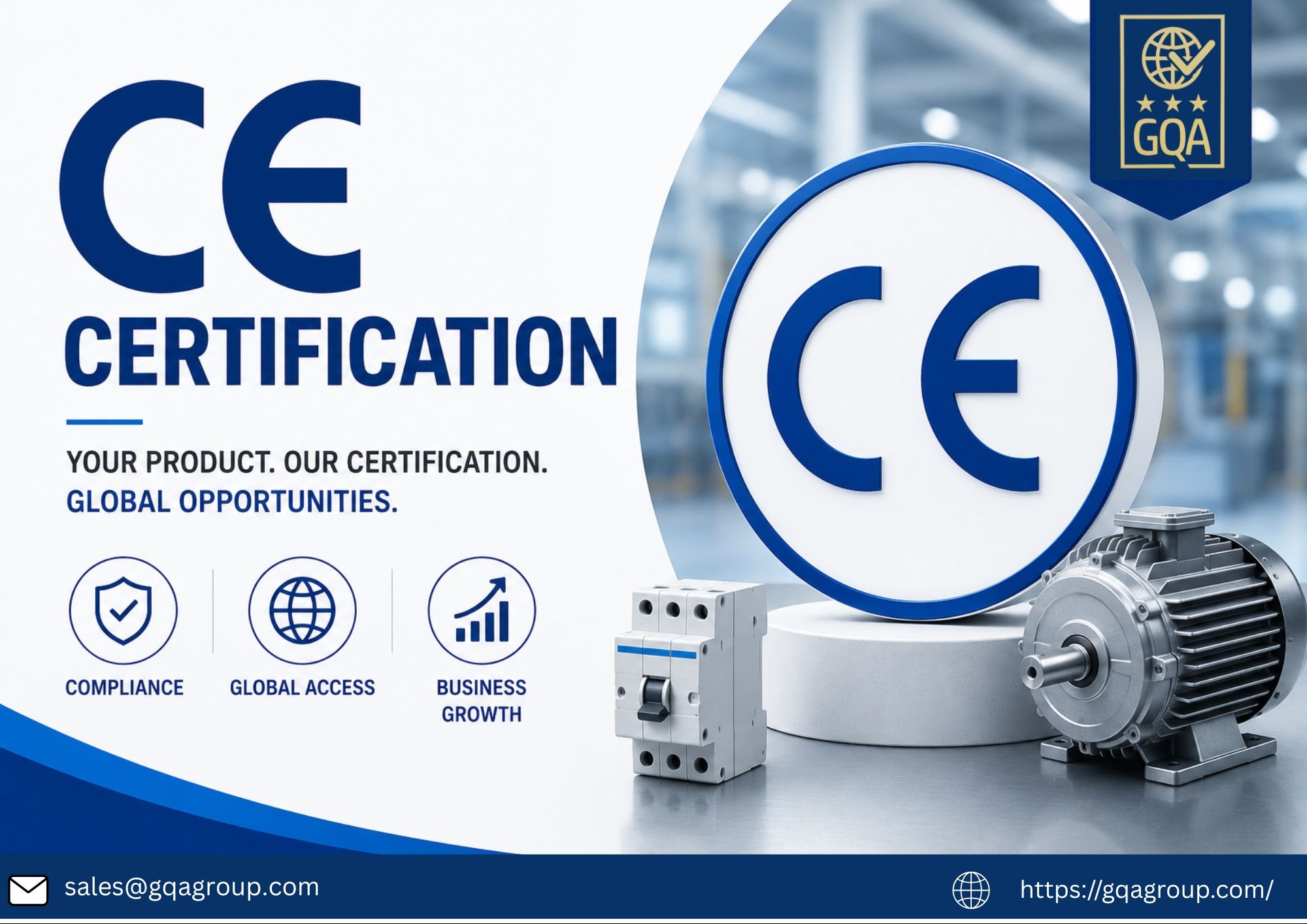
CE Certification indicates that a product complies with the essential safety, health, and environmental protection requirements established by the European Union. The CE mark allows eligible products to be marketed and sold across all EU member states and the European Economic Area.
Contrary to common belief, CE Certification is not a quality certificate. Instead, it confirms that the manufacturer has assessed the product and ensured it complies with all applicable EU regulations before placing it on the market.
Why is CE Certification Important?
CE Certification offers several benefits for manufacturers and exporters:
- Access to the European market.
- Demonstrates compliance with EU regulations.
- Enhances customer confidence and product credibility.
- Reduces the risk of customs delays and product recalls.
- Improves brand reputation in international markets.
- Supports business growth through global exports.
For businesses planning to export products to Europe, CE Certification is often a mandatory legal requirement.
How to Get CE Certification
Many manufacturers ask, How to get CE Certification? The process depends on your product category and the applicable European directives.
Generally, manufacturers should:
- Identify the applicable EU directives or regulations.
- Determine whether third-party assessment is required.
- Conduct product testing and risk assessment.
- Prepare the required technical documentation.
- Issue the EU Declaration of Conformity.
- Affix the CE marking to the product.
Some products can be self-declared by the manufacturer, while others require evaluation by a Notified Body before CE marking can be applied.
CE Certification Process
Understanding the CE Certification process helps businesses avoid delays and ensure compliance.
Step 1: Identify Applicable Directives
The first step is identifying which EU directives or regulations apply to your product. Different products fall under different regulatory frameworks.
Step 2: Assess Product Compliance
Evaluate whether your product meets all essential safety and performance requirements. This may involve laboratory testing, inspections, and technical evaluations.
Step 3: Prepare Technical Documentation
Proper CE Certification Documentation is one of the most important aspects of compliance. Technical files typically include:
- Product description
- Design drawings
- Bill of materials
- Risk assessment
- Test reports
- User manuals
- Applicable standards
- Manufacturing process details
- Quality control records
These documents should be maintained and made available to authorities if requested.
Step 4: Product Testing
Testing ensures the product complies with relevant harmonized European standards. Depending on the product type, testing may include electrical safety, mechanical safety, EMC, environmental, or performance evaluations.
Step 5: Declaration of Conformity
After successful assessment, the manufacturer prepares and signs the EU Declaration of Conformity stating that the product complies with all applicable regulations.
Step 6: Affix the CE Mark
Once compliance is confirmed, the CE mark can be placed on the product, packaging, or accompanying documentation where required.
CE Certification for Manufacturers
CE Certification for manufacturers is essential for businesses exporting products to European countries. Manufacturers are legally responsible for ensuring that their products comply with all relevant EU directives.
Manufacturers must:
- Design products according to applicable standards.
- Maintain technical documentation.
- Perform conformity assessments.
- Keep records for regulatory authorities.
- Ensure consistent product quality during production.
Working with experienced compliance professionals helps manufacturers reduce risks and complete certification efficiently.
CE Certification Requirements
The CE Certification requirements vary depending on the product category. However, most products require:
- Product compliance assessment
- Applicable EU directives identification
- Risk assessment
- Product testing
- Technical documentation
- Declaration of Conformity
- Proper CE marking
- Ongoing compliance with production quality
Failure to meet these requirements can result in penalties, import restrictions, or product recalls within the European market.
CE Certification Documentation
Accurate CE Certification Documentation plays a crucial role during the certification process. A complete technical file demonstrates that the product has been designed and manufactured according to applicable European regulations.
Documentation should be organized, updated regularly, and retained for the period specified under the applicable directives.
Incomplete documentation is one of the most common reasons for delays in CE compliance.
CE Certification Registration
Many businesses search for CE Certification Registration, but it is important to understand that there is generally no central European government registration system for CE marking.
Instead, manufacturers complete the conformity assessment process, prepare the required documentation, issue the Declaration of Conformity, and affix the CE mark where applicable. Certain product categories may require involvement from a Notified Body before the CE mark can be applied.
Professional guidance ensures the registration and documentation process is completed correctly.
CE Certification Cost
One of the most frequently asked questions concerns CE Certification cost.
The cost depends on several factors, including:
- Product category
- Applicable EU directives
- Product complexity
- Laboratory testing requirements
- Number of product models
- Need for a Notified Body
- Documentation preparation
- Consultancy support
Simple products requiring self-declaration generally involve lower costs, while regulated products requiring testing and third-party assessment may involve higher certification expenses.
Requesting an individual assessment is the best way to obtain an accurate quotation.
Why Choose Professional CE Certification Services?
Navigating European regulations can be challenging without expert guidance. Professional CE Certification Services help businesses complete the process efficiently while minimizing compliance risks.
A reliable consultant assists with:
- Product classification
- Applicable directive identification
- Technical documentation
- Risk assessment
- Testing coordination
- Compliance review
- Declaration of Conformity
- End-to-end certification support
This allows manufacturers to focus on production while ensuring regulatory compliance.
Why Work with a CE Certification Consultant India?
Choosing an experienced CE Certification Consultant India provides valuable local expertise combined with international compliance knowledge.
An experienced consultant can help reduce documentation errors, speed up the certification process, coordinate testing requirements, and ensure your products meet European regulatory expectations.
If your organization plans to export products to the European market, partnering with a trusted consultancy can save both time and cost while improving compliance confidence.
Conclusion
CE Certification is more than a regulatory requirement it's a gateway to the European market. By understanding the certification process, preparing accurate documentation, and meeting all applicable requirements, manufacturers can confidently expand their business internationally.
Whether you're launching a new product or exporting an existing one, professional guidance can simplify every stage of the compliance journey. At GQA Group, we provide comprehensive CE Certification Services, helping manufacturers achieve compliance efficiently through expert consultation, documentation support, testing coordination, and end-to-end certification assistance.
Frequently Asked Questions (FAQs)
1. What is CE Certification?
CE Certification confirms that a product complies with applicable European Union safety, health, and environmental regulations, allowing it to be sold in the European Economic Area (EEA).
2. How long does the CE Certification process take?
The timeline depends on the product type, testing requirements, documentation readiness, and whether a Notified Body is involved. It can range from a few weeks to several months.
3. Is CE Certification mandatory for all products?
No. CE marking is only mandatory for products covered by specific EU directives or regulations, such as machinery, electrical equipment, medical devices, toys, and certain construction products.
4. What documents are required for CE Certification?
Typical documentation includes technical files, risk assessments, test reports, product specifications, user manuals, applicable standards, and the EU Declaration of Conformity.
5. How can GQA Group help with CE Certification?
GQA Group provides end-to-end CE Certification Services, including product assessment, documentation support, testing coordination, compliance guidance, and assistance throughout the certification process to help manufacturers meet EU requirements.