
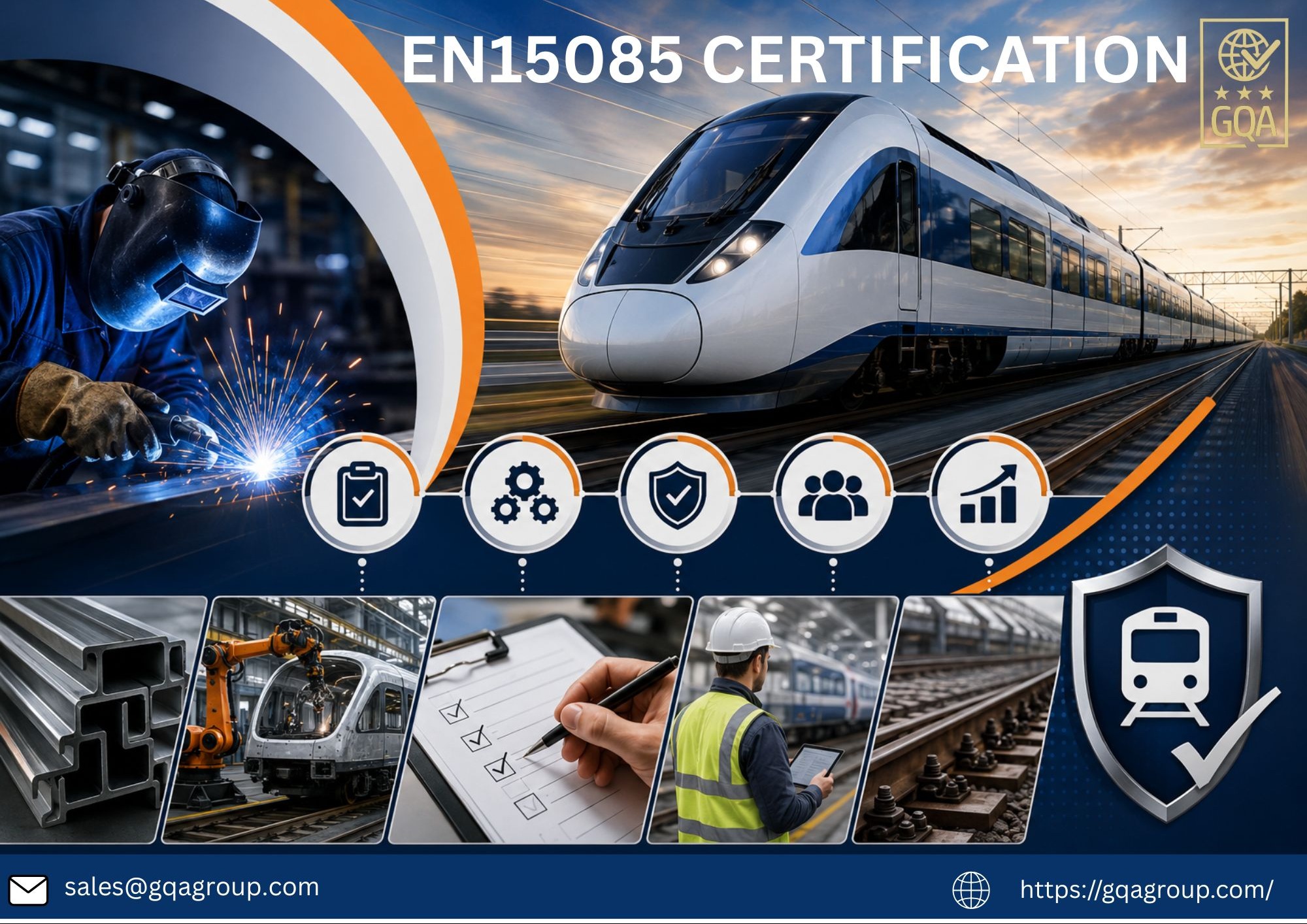
The railway industry demands the highest levels of quality, safety, and reliability. Every welded component used in railway vehicles must meet internationally recognized standards to ensure passenger safety and operational excellence. This is where EN 15085 Certification becomes essential.
Whether you are a railway component manufacturer, fabrication company, wagon builder, coach manufacturer, or engineering organization, obtaining EN 15085 certification demonstrates your capability to produce high-quality welded railway products that comply with European standards.
In this comprehensive guide, we will explain the EN 15085 Standard, how to get EN 15085 Certification, certification requirements, implementation process, documentation, audit checklist, certification cost in India, and the benefits of becoming certified.
What is EN 15085 Certification?
EN 15085 Certification is an internationally recognized welding certification specifically developed for manufacturers involved in the welding of railway vehicles and railway components. The standard establishes quality requirements for welding processes, personnel qualifications, production control, inspection, and documentation.
The certification ensures that manufacturers consistently produce safe and reliable welded products that meet the expectations of railway operators and international customers.
Many railway OEMs, government organizations, and global buyers require suppliers to hold EN 15085 certification before awarding contracts.
Understanding the EN 15085 Standard
The EN 15085 Standard covers the complete lifecycle of welded railway products. It specifies technical and quality requirements for manufacturing railway vehicles, bogies, coaches, locomotives, wagons, and structural railway components.
The standard focuses on:
- Welding quality management
- Qualified welding coordinators
- Competent welders
- Approved welding procedures
- Material traceability
- Inspection and testing
- Quality documentation
- Continuous process improvement
By implementing these requirements, organizations can reduce welding defects, improve product reliability, and meet international railway industry expectations.
How to Get EN 15085 Certification?
Many companies ask, 'How to get EN 15085 Certification?'
The certification process becomes much easier when you follow a structured implementation plan.
Step 1: Initial Gap Assessment
Evaluate your current welding practices against EN 15085 requirements. This helps identify areas requiring improvement before implementation begins.
Step 2: Develop Documentation
Prepare all required quality management documents, including welding procedures, inspection plans, work instructions, quality manuals, and records.
Step 3: EN 15085 Implementation
Successful EN 15085 Implementation involves establishing standardized welding processes, assigning qualified personnel, training employees, and implementing quality control systems throughout production.
Step 4: Employee Training
Ensure welders, welding coordinators, inspectors, and quality personnel understand the standard and their responsibilities.
Step 5: Internal Audit
Conduct an internal audit to verify compliance and identify any non-conformities before the certification audit.
Step 6: Certification Audit
An accredited certification body reviews your documentation, manufacturing facilities, welding processes, and quality management system. Once all requirements are fulfilled, the organization receives EN 15085 Certification.
EN 15085 Certification Requirements
Understanding the EN 15085 Certification Requirements helps organizations prepare effectively for certification.
Key requirements include:
- Qualified welding coordinator
- Qualified welders
- Approved welding procedures
- Welding Procedure Specifications (WPS)
- Material traceability system
- Inspection and testing procedures
- Calibration of measuring equipment
- Documented quality management system
- Internal audits
- Corrective action process
- Production records
- Continuous monitoring of welding quality
Meeting these requirements ensures consistent manufacturing quality and compliance with international railway standards.
EN 15085 Certification Process
The EN 15085 Certification Process generally includes the following stages:
- Initial consultation
- Gap analysis
- Documentation preparation
- Implementation of welding quality controls
- Personnel qualification
- Internal audit
- Management review
- Certification audit
- Closure of observations
- Certification approval
A well-planned implementation significantly reduces delays during certification.
EN 15085 Documentation Support
Documentation is one of the most important aspects of certification.
Professional EN 15085 Documentation Support typically includes:
- Quality Manual
- Welding Procedure Specifications (WPS)
- Procedure Qualification Records (PQR)
- Welding quality plans
- Inspection and Test Plans (ITP)
- Material traceability records
- Welder qualification records
- Calibration records
- Internal audit reports
- Corrective action reports
- Risk assessments
- Training records
Well-prepared documentation helps organizations pass audits smoothly and maintain long-term compliance.
EN 15085 Audit Checklist
Before the certification audit, organizations should verify the following using an EN 15085 Audit Checklist:
- Qualified welding coordinator appointed
- Welder qualifications are valid
- Approved welding procedures available
- Material traceability maintained
- Inspection records completed
- Calibration certificates available
- Internal audit completed
- Corrective actions implemented
- Quality records maintained
- Personnel training records updated
- Manufacturing processes controlled
- Documentation readily available
Completing this checklist before the audit increases the likelihood of successful certification.
EN 15085 Certification for Railway Components
Manufacturers supplying EN 15085 Certification for Railway Components gain greater credibility in domestic and international markets.
The certification is applicable to manufacturers producing:
- Railway coaches
- Wagons
- Locomotive structures
- Bogies
- Chassis
- Couplers
- Structural frames
- Railway fabrication assemblies
- Welded steel components
- Railway equipment and subassemblies
Certified manufacturers are often preferred by railway operators and OEMs because the certification demonstrates compliance with internationally accepted welding quality standards.
What are the Benefits of EN 15085 Certification?
Many organizations ask, 'What are the benefits of EN 15085 Certification?'
Some of the major advantages include:
- Improved product quality
- Enhanced welding consistency
- Reduced manufacturing defects
- Better customer confidence
- Increased eligibility for railway tenders
- Access to international markets
- Improved process efficiency
- Reduced rework and production costs
- Better regulatory compliance
- Stronger company reputation
- Competitive advantage in railway manufacturing
Overall, EN 15085 certification helps organizations improve operational performance while increasing business opportunities.
EN 15085 Certification Cost in India
The EN 15085 Certification Cost in India depends on several factors, including:
- Organization size
- Number of manufacturing locations
- Scope of certification
- Number of welding processes
- Complexity of products
- Existing quality management system
- Documentation readiness
- Training requirements
Since every organization has different operational requirements, obtaining a customized quotation from an experienced certification consultant is recommended.
Why Choose Professional EN 15085 Certification Services?
Working with the Best EN 15085 Certification Services provider can simplify the certification journey and reduce implementation time.
An experienced consultant can assist with:
- Gap analysis
- Documentation preparation
- Employee training
- Implementation support
- Internal audits
- Audit coordination
- Corrective action support
- Certification assistance
Professional guidance helps organizations achieve certification efficiently while minimizing disruptions to production.
Why Choose GQA Group?
GQA Group is a trusted EN 15085 Certification Consultant India, offering complete consultancy and implementation support for railway manufacturers across India.
Our services include:
- Gap assessment
- EN 15085 implementation
- Documentation support
- Employee awareness training
- Internal audit
- Certification coordination
- Post-certification support
With industry expertise and a practical approach, GQA Group helps organizations achieve compliance with confidence and improve their competitiveness in the railway sector.
Visit https://www.gqagroup.com/ to learn more about our EN 15085 certification services or contact our experts for a customized consultation.
Conclusion
As railway manufacturing continues to evolve, maintaining high-quality welding standards is essential for business growth and customer confidence. EN 15085 Certification demonstrates your organization's commitment to quality, safety, and international best practices.
Whether you are planning EN 15085 Implementation, looking for EN 15085 Documentation Support, or searching for the Best EN 15085 Certification Services, partnering with experienced professionals can make the certification process smooth and successful.
Investing in EN 15085 certification today not only improves operational performance but also opens new opportunities in India's growing railway manufacturing sector and the global marketplace.
Frequently Asked Questions (FAQs)
1. What is EN 15085 Certification?
EN 15085 Certification is an internationally recognized standard for the welding of railway vehicles and railway components. It ensures manufacturers meet strict quality and safety requirements for welded railway products.
2. How to get EN 15085 Certification?
The process includes gap analysis, documentation preparation, implementation of welding quality controls, employee training, internal audits, and a certification audit conducted by an accredited certification body.
3. Who needs EN 15085 Certification?
Manufacturers of railway coaches, wagons, locomotives, bogies, structural assemblies, and other welded railway components commonly require EN 15085 certification to meet customer and regulatory requirements.
4. What are the benefits of EN 15085 Certification?
Benefits include improved welding quality, reduced defects, increased customer confidence, eligibility for railway projects, enhanced market reputation, and access to international business opportunities.
5. What is the EN 15085 Certification Cost in India?
The certification cost varies depending on factors such as company size, certification scope, manufacturing complexity, number of welding processes, documentation readiness, and audit requirements. A customized assessment is the best way to obtain an accurate estimate.