


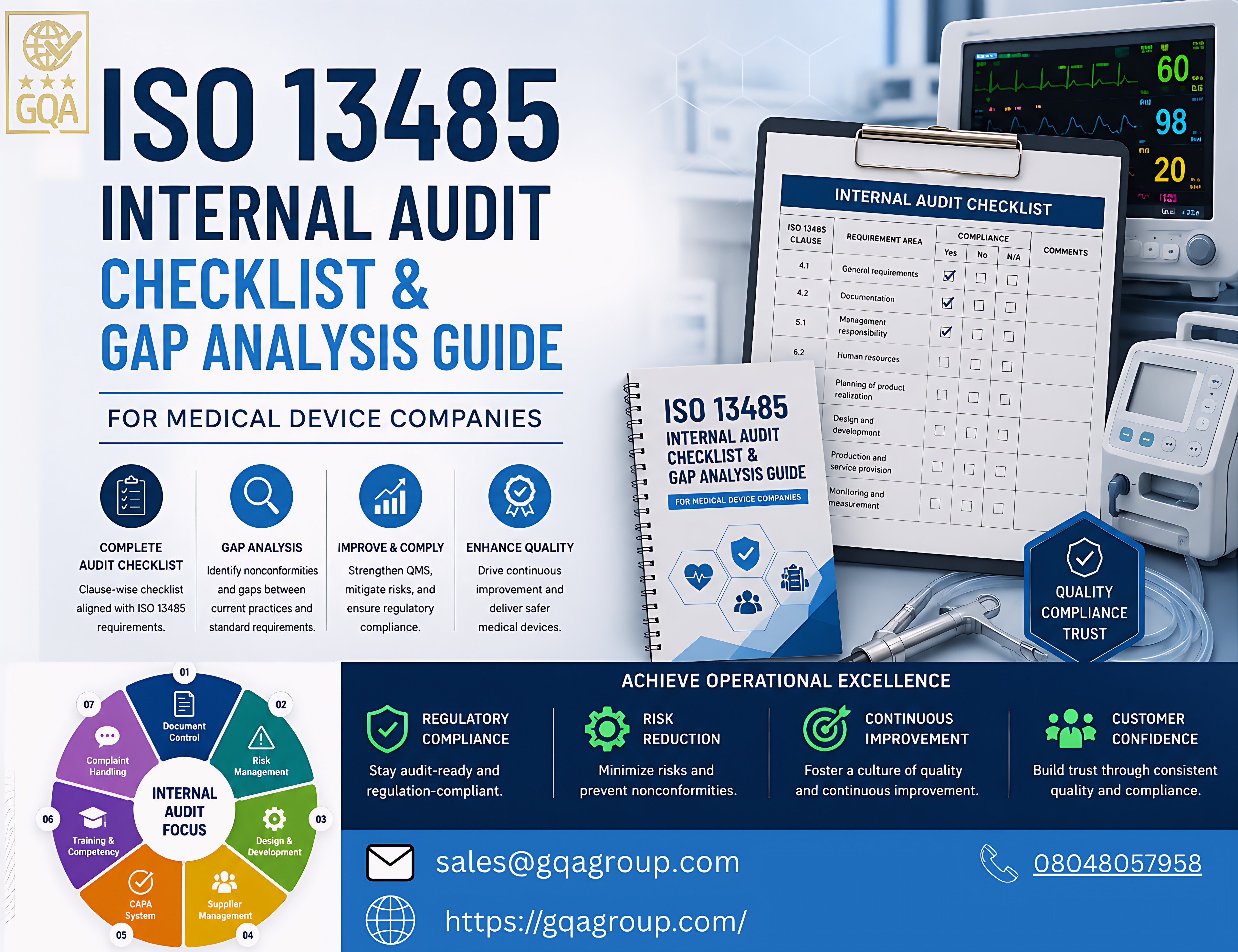
Medical device companies must maintain strict quality management systems to ensure product safety, regulatory compliance, and customer trust. One of the most important requirements of the ISO 13485 Standard is conducting regular internal audits to evaluate whether the Quality Management System (QMS) is functioning effectively.
An effective ISO 13485 internal audit checklist helps organizations identify gaps, reduce nonconformities, and prepare for certification audits. Whether you are a medical device manufacturer, supplier, or service provider, internal audits are essential for maintaining compliance and improving operational performance.
In this guide, we will explain the ISO 13485 internal audit process, audit checklist requirements, gap analysis methods, FDA compliance alignment, certification audits, and audit costs for medical device companies.
What is the ISO 13485 Standard?
The ISO 13485 Standard is an internationally recognized quality management system standard designed specifically for medical device organizations. It focuses on regulatory compliance, risk management, product safety, traceability, documentation control, and continuous improvement.
ISO 13485 certification demonstrates that a company can consistently provide medical devices and related services that meet customer and regulatory requirements.
The standard applies to:
- Medical device manufacturers
- Component suppliers
- Sterilization service providers
- Packaging companies
- Distributors and importers
- Calibration laboratories
What is an ISO 13485 Internal Audit?
An ISO 13485 internal audit is a systematic review of the organization’s quality management system to verify compliance with ISO 13485 requirements.
The purpose of an internal audit is to:
- Identify nonconformities
- Verify process effectiveness
- Evaluate regulatory compliance
- Improve operational performance
- Prepare for certification audits
Internal audits help companies identify weaknesses before external auditors or regulatory authorities discover them.
Why is an ISO 13485 Internal Audit Checklist Important?
An ISO 13485 internal audit checklist helps auditors evaluate all important areas of the quality management system in a structured and consistent manner.
A proper medical device internal audit checklist ensures that organizations review:
- Document control
- Risk management
- Design and development
- Supplier controls
- Corrective and preventive actions (CAPA)
- Training records
- Product traceability
- Complaint handling
- Validation activities
Using a checklist improves audit consistency and reduces the risk of missing critical compliance issues.
ISO 13485 Internal Audit Checklist Requirements
Below are some important areas included in an ISO 13485 audit checklist:
1. Document Control
- Are procedures approved and updated?
- Are obsolete documents removed?
- Are records properly maintained?
2. Risk Management
- Is risk analysis documented?
- Are risk control measures effective?
- Is post-market risk monitoring conducted?
3. Design and Development
- Are design inputs and outputs documented?
- Is design validation completed?
- Are design changes controlled?
4. Supplier Management
- Are suppliers evaluated and approved?
- Is supplier performance monitored?
- Are purchasing controls effective?
5. CAPA System
- Are corrective actions documented?
- Are root causes identified?
- Are preventive actions implemented effectively?
6. Training and Competency
- Are employee training records maintained?
- Are personnel qualified for assigned responsibilities?
7. Complaint Handling
- Are complaints investigated properly?
- Are adverse events documented?
- Is feedback used for improvement?
ISO 13485 Gap Analysis Process
An ISO 13485 gap analysis is performed before certification or surveillance audits to identify missing requirements and compliance gaps.
The gap analysis process generally includes:
- Reviewing current QMS documentation
- Comparing processes against ISO 13485 requirements
- Identifying nonconformities
- Creating corrective action plans
- Implementing improvements
Gap analysis helps organizations become audit-ready and reduces certification risks.
Professional consulting firms like GQA Group can support medical device companies with ISO 13485 gap analysis and implementation services.
FDA and ISO 13485 Compliance
Many medical device companies must comply with both FDA regulations and ISO 13485 requirements.
The FDA Quality Management System Regulation (QMSR) is increasingly aligned with ISO 13485 principles. Because of this harmonization, companies implementing ISO 13485 can improve readiness for FDA inspections and international regulatory approvals.
FDA and ISO 13485 alignment helps organizations:
- Improve product quality
- Reduce compliance risks
- Simplify regulatory processes
- Support global market access
ISO 13485 Audit Certification Process
The ISO 13485 audit certification process usually includes:
Stage 1 Audit
The certification body reviews:
- Documentation
- Procedures
- Scope of the quality management system
Stage 2 Audit
The auditor evaluates:
- Process implementation
- Employee competency
- Operational controls
- Compliance effectiveness
After successful completion, the organization receives ISO 13485 certification.
Regular surveillance audits are then conducted to maintain certification status.
How Much Does ISO 13485 Audit Cost?
One of the most common questions companies ask is: how much does ISO 13485 audit cost?
The cost depends on several factors:
- Company size
- Number of employees
- Scope of activities
- Number of sites
- Complexity of medical devices
- Certification body fees
Small companies may spend a few thousand dollars, while large manufacturers with complex operations may have significantly higher certification costs.
Additional costs may include:
- Consultant support
- Internal auditor training
- Documentation development
- Gap analysis services
Common ISO 13485 Compliance Audit Findings
During an ISO 13485 compliance audit, auditors commonly identify issues such as:
- Incomplete documentation
- Missing training records
- Weak CAPA processes
- Inadequate supplier controls
- Poor risk management documentation
- Lack of validation evidence
Organizations that perform regular internal audits are better prepared to address these findings before certification audits.
Conclusion
Conducting regular internal audits is essential for maintaining compliance with the ISO 13485 Standard and improving medical device quality management systems.
A structured ISO 13485 internal audit checklist helps organizations identify risks, improve processes, and prepare for certification audits confidently.
Whether you are preparing for certification, conducting a gap analysis, or improving FDA compliance readiness, internal audits play a critical role in long-term business success.
For professional ISO 13485 consulting, training, implementation, and audit support services, visit GQA Group.
FAQs
1. What is an ISO 13485 internal audit checklist?
An ISO 13485 internal audit checklist is a structured tool used to evaluate whether a medical device company complies with ISO 13485 quality management system requirements.
2. Why is ISO 13485 internal audit important?
Internal audits help organizations identify nonconformities, improve processes, ensure regulatory compliance, and prepare for certification audits.
3. What is ISO 13485 gap analysis?
ISO 13485 gap analysis is the process of comparing existing quality management systems with ISO 13485 requirements to identify missing elements or compliance gaps.
4. How often should ISO 13485 internal audits be conducted?
Most organizations conduct internal audits at least once a year, although high-risk processes may require more frequent audits.
5. How much does ISO 13485 audit cost?
ISO 13485 audit costs depend on company size, scope, complexity, and certification body fees. Costs can vary significantly between small and large organizations.