


In today’s digital business world, organizations handle large amounts of sensitive customer information every day. From cloud platforms and SaaS applications to financial systems and customer databases, businesses are expected to maintain strong security practices. This is where SOC 2 becomes important.
Companies that process or store customer data must demonstrate that their systems are secure, reliable, and properly managed. SOC 2 helps organizations build trust with clients, improve cybersecurity controls, and meet growing compliance expectations.
Many enterprise customers now require vendors and technology partners to achieve SOC 2 compliance before signing contracts. As cybersecurity threats continue to increase, SOC 2 has become one of the most recognized standards for data security and operational reliability.
Businesses looking for professional guidance and implementation support can explore services offered by GQA Group.
What is SOC 2? (Definition)
Definition of SOC 2
SOC 2 stands for System and Organization Controls 2. SOC 2 full form is “System and Organization Controls 2,” a cybersecurity compliance framework developed to help organizations protect customer data through strong security controls and operational practices.
SOC 2 is a cybersecurity compliance framework developed by the American Institute of Certified Public Accountants. The framework helps businesses prove that they have implemented proper systems and processes to protect sensitive information. SOC 2 is widely used by cloud service providers, SaaS companies, IT service providers, and businesses that store or process customer data.
A SOC 2 audit reviews whether an organization follows the required Trust Service Criteria and maintains effective internal controls.
Why SOC 2 is Needed
Importance of SOC 2 for Businesses
The demand for SOC 2 compliance has increased rapidly because businesses now rely heavily on cloud technologies and digital platforms. Customers want assurance that their data is safe from cyber threats, unauthorized access, and operational failures.
Here are the main reasons why SOC 2 is needed:
1. Enhances Data Security
SOC 2 helps organizations establish strong cybersecurity controls. It ensures systems are protected against hacking, malware, and unauthorized access.
2. Builds Customer Trust
When a company achieves SOC 2 compliance, it demonstrates commitment to protecting customer information. This creates confidence among clients, partners, and investors.
3. Meets Client Requirements
Many enterprises require vendors and service providers to have SOC 2 reports before signing contracts. Without SOC 2, companies may lose business opportunities.
4. Reduces Cybersecurity Risks
SOC 2 encourages organizations to identify vulnerabilities and strengthen internal controls. This reduces the chances of data breaches and operational disruptions.
5. Supports Business Growth
SOC 2 compliance can help businesses expand into international markets and attract enterprise customers who prioritize security and compliance.
Understanding SOC 2 Trust Principles
Trust Service Criteria in SOC 2
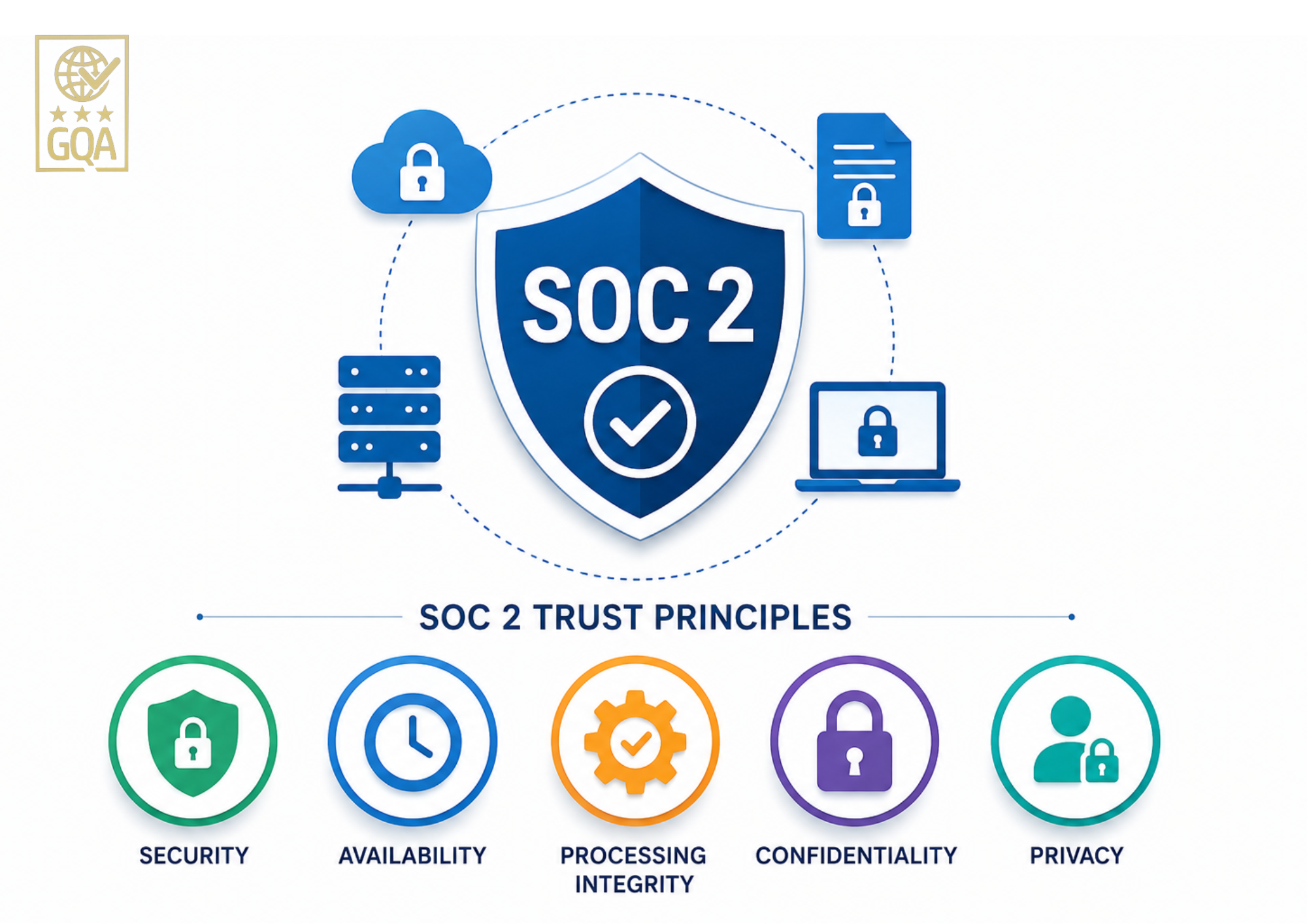
The SOC 2 framework is based on five Trust Service Criteria, also called Trust Principles. Organizations can choose the criteria relevant to their business operations.
1. Security
Security is the core requirement of SOC 2. It focuses on protecting systems and data from unauthorized access, cyberattacks, and security threats.
2. Availability
Availability ensures that systems and services remain operational and accessible according to agreed business commitments.
3. Processing Integrity
This principle confirms that system processing is accurate, complete, valid, and authorized.
4. Confidentiality
Confidentiality focuses on protecting sensitive business information from unauthorized disclosure.
5. Privacy
Privacy ensures that personal information is collected, stored, processed, and disposed of responsibly according to privacy regulations.
These Trust Principles form the foundation of SOC 2 compliance and help organizations maintain secure business operations.
Who Needs SOC 2?
Businesses That Should Consider SOC 2
SOC 2 is especially important for organizations that store, process, or transmit customer data. It is commonly required in industries where data security is critical.
The following businesses usually need SOC 2 compliance:
- SaaS companies
- Cloud service providers
- IT managed service providers
- Data centers
- Fintech companies
- Healthcare technology firms
- E-commerce platforms
- Digital marketing agencies handling customer data
- Software development companies
- AI and technology startups
Even small businesses can benefit from SOC 2 if they want to work with enterprise clients or strengthen cybersecurity practices.
SOC 2 Benefits for Organizations
Key Benefits of SOC 2 Compliance
Implementing SOC 2 offers several long-term advantages for businesses.
Improved Reputation
SOC 2 certification demonstrates professionalism and commitment to information security. It enhances brand reputation and market credibility.
Stronger Competitive Advantage
Companies with SOC 2 compliance often stand out from competitors. Many clients prefer vendors that already meet security standards.
Better Risk Management
SOC 2 helps organizations identify security gaps and improve internal processes to reduce operational risks.
Increased Customer Confidence
Customers feel safer working with businesses that follow recognized security standards like SOC 2.
Easier Sales Process
Enterprise clients frequently ask for SOC 2 reports during vendor assessments. Having SOC 2 can speed up contract approvals and procurement processes.
Regulatory Readiness
SOC 2 helps organizations align with other cybersecurity and privacy regulations, improving overall compliance management.
Operational Efficiency
The implementation process often improves documentation, workflows, and security management practices across departments.
SOC 2 Type I vs SOC 2 Type II
Understanding the Difference
There are two types of SOC 2 reports:
SOC 2 Type I
SOC 2 Type I evaluates whether security controls are properly designed at a specific point in time.
SOC 2 Type II
SOC 2 Type II evaluates both the design and operational effectiveness of controls over a defined period, usually 6 to 12 months.
Most enterprise customers prefer SOC 2 Type II because it provides stronger evidence of continuous compliance and operational security.
Steps to Achieve SOC 2 Compliance
SOC 2 Implementation Process
Organizations typically follow these steps to achieve SOC 2 compliance:
- Conduct a readiness assessment
- Identify security gaps
- Implement required controls
- Develop policies and procedures
- Train employees on security practices
- Monitor systems and collect evidence
- Perform internal reviews
- Complete the external SOC 2 audit
Working with experienced consultants can simplify the implementation process and reduce compliance challenges.
Why Choose Professional SOC 2 Consulting
SOC 2 implementation can be complex, especially for growing businesses with limited compliance experience. Professional consultants help organizations prepare documentation, improve security controls, and manage audit readiness effectively.
GQA Group Official Website provides consulting and compliance solutions that help organizations achieve SOC 2 readiness efficiently and professionally.
Conclusion
SOC 2 has become an essential compliance framework for businesses handling sensitive customer information. It helps organizations strengthen cybersecurity, improve customer trust, and meet modern compliance expectations.
From startups to large enterprises, SOC 2 provides a structured approach to protecting data and maintaining secure operations. Companies that invest in SOC 2 compliance often gain a stronger market reputation, improved client confidence, and better growth opportunities .As cybersecurity risks continue to evolve, implementing SOC 2 is a strategic decision that supports long-term business success.
FAQs
1. What is SOC 2 compliance?
SOC 2 compliance is a cybersecurity framework that evaluates how organizations protect customer data through security controls and internal processes.
2. Who performs a SOC 2 audit?
A SOC 2 audit is conducted by licensed Certified Public Accountants (CPAs) authorized to assess compliance with AICPA standards.
3. Is SOC 2 mandatory for all businesses?
SOC 2 is not legally mandatory, but many enterprise customers require it before working with vendors or service providers.
4. How long does SOC 2 implementation take?
The SOC 2 process can take several months depending on the organization’s size, existing controls, and audit scope.
5. What is the difference between SOC 2 Type I and Type II?
SOC 2 Type I reviews control design at a specific time, while SOC 2 Type II evaluates how effectively those controls operate over a longer period.