


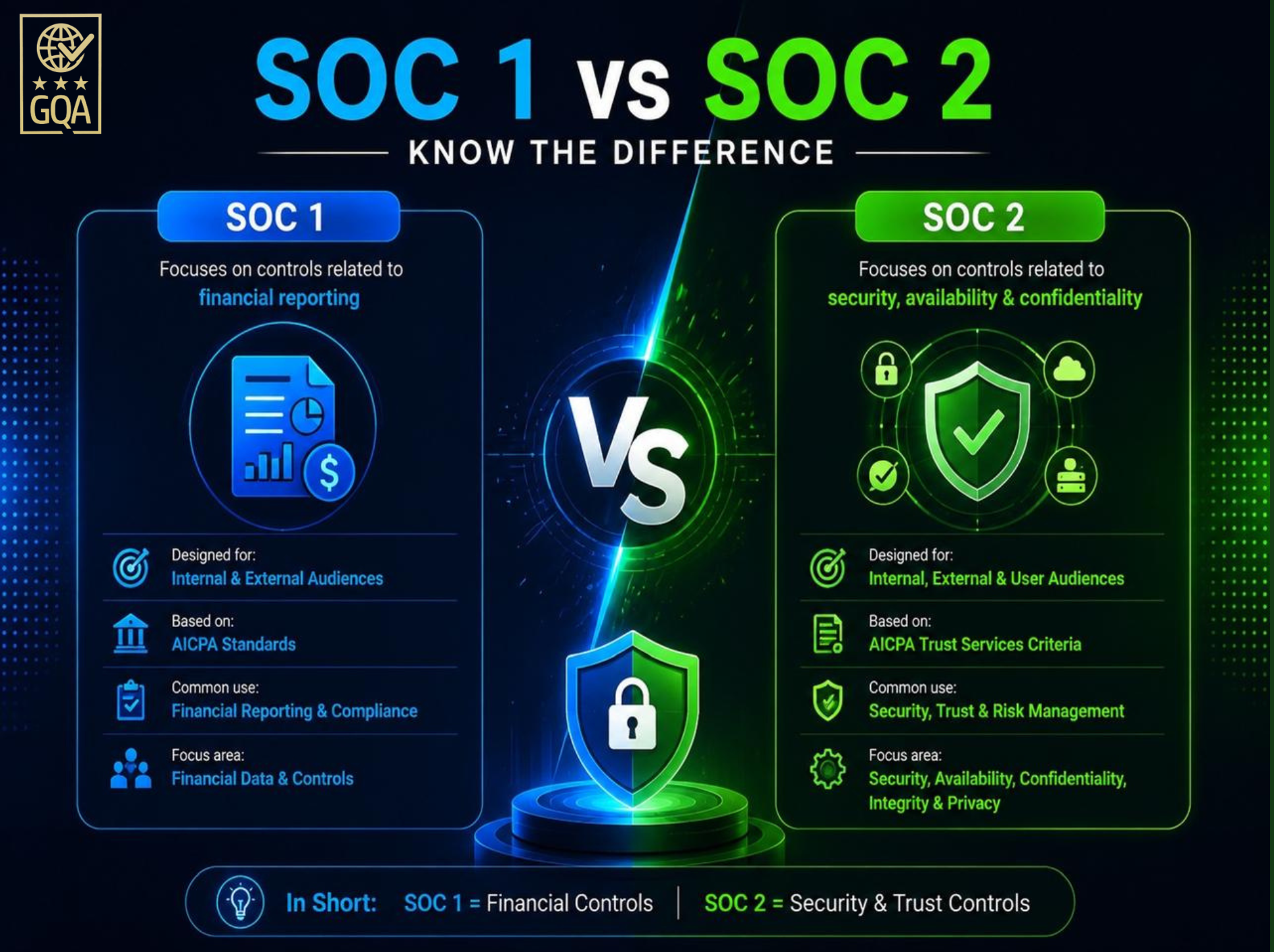
In today’s digital business environment, organizations are expected to maintain strong security, financial, and operational controls. Clients, investors, and enterprise partners want assurance that their data and systems are properly managed and protected. This is where SOC reports become important.
Among the most recognized compliance frameworks are SOC 1 and SOC 2. Although both are developed by the AICPA (American Institute of Certified Public Accountants), they serve different purposes and industries.
Understanding the difference between SOC 1 vs SOC 2, as well as SOC 2 Type 1 vs Type 2, helps organizations choose the right compliance framework based on their business requirements.
What is SOC 1?
SOC 1 is a compliance report focused on internal controls related to financial reporting. It is mainly designed for organizations whose services can impact a client’s financial statements.
SOC 1 audits are commonly used by payroll companies, accounting service providers, financial processing firms, and organizations handling financial transactions.
The main objective of SOC 1 is to evaluate whether a company has proper financial controls in place to ensure accuracy, reliability, and compliance.
What is SOC 2?
SOC 2 is a security-focused compliance framework designed for organizations that store, process, or manage customer data. SOC 2 evaluates how effectively a company protects sensitive information based on the five Trust Service Criteria:
- Security
- Availability
- Processing Integrity
- Confidentiality
- Privacy
SOC 2 compliance has become extremely important for technology companies and cloud-based service providers because enterprise customers now expect vendors to maintain strong security standards and privacy controls.
SOC 2 is commonly adopted by:
- SaaS companies
- Cloud service providers
- IT service organizations
- Cybersecurity companies
- Data centers
- Healthcare technology providers
- FinTech organizations
For many modern businesses, SOC 2 compliance is no longer optional it has become a major requirement for enterprise partnerships.
Purpose of SOC 1 & SOC 2
Although both frameworks are part of SOC reporting standards, their purposes are very different.
Purpose of SOC 1
SOC 1 focuses on financial controls and reporting accuracy. It helps clients understand whether a service organization can securely and accurately manage financial information.
Purpose of SOC 2
SOC 2 focuses on cybersecurity, data protection, system availability, and privacy controls. It demonstrates that an organization follows strong security practices to protect customer data.
SOC 1 vs SOC 2 Comparison Table
SOC 1 SOC 2
Financial Reporting Controls Data Security & Privacy
Payroll, Finance, Accounting SaaS, Cloud, IT, Tech
Financial Processes Security Controls
Auditors & Financial Stakeholders Clients & Business Partners
Internal Control over Financial Reporting Trust Service Criteria
Financial transaction services Data handling & cybersecurity
SOC 2 Type 1 vs Type 2
SOC 2 reports are divided into two categories: Type 1 and Type 2.
Understanding the difference between SOC 2 Type 1 vs Type 2 is important before starting the compliance process.
SOC 2 Type 1
SOC 2 Type 1 evaluates whether security controls are properly designed at a specific point in time.
This report focuses on the design and implementation of controls rather than long-term operational effectiveness.
Best for:
- Early-stage compliance readiness
- Organizations beginning their SOC journey
- Startups preparing for enterprise requirements
SOC 2 Type 2
SOC 2 Type 2 evaluates whether security controls operate effectively over a defined period, typically between 3 to 12 months.
This is considered the most comprehensive SOC 2 assessment because it demonstrates continuous compliance and operational effectiveness.
Benefits of SOC 2 Type 2
Achieving SOC 2 Type 2 compliance offers several business advantages.
Key Benefits Include:
- Builds stronger customer trust
- Demonstrates long-term security commitment
- Improves cybersecurity posture
- Reduces operational and compliance risks
- Helps win enterprise contracts
- Enhances brand reputation
- Supports vendor approval requirements
- Strengthens competitive advantage
Today, many global organizations specifically request SOC 2 Type 2 reports before partnering with vendors or technology providers.
Which One Should You Choose?
Choosing between SOC 1 and SOC 2 depends on your business operations and the type of services you provide.
Choose SOC 1 if:
- Your organization affects customer financial reporting
- You handle payroll or financial transactions
- Your services impact accounting records
Choose SOC 2 if:
- You store or process customer data
- You provide SaaS or cloud-based services
- Your clients require cybersecurity assurance
- Data protection and privacy are critical to your business
In many cases, technology companies and cloud providers pursue SOC 2 Type 2 because it aligns with modern cybersecurity expectations and enterprise security requirements.
Industry Use Cases
Industries Commonly Using SOC 1
- Payroll processing firms
- Financial service providers
- Banking support organizations
- Accounting service companies
- Payment processing companies
Industries Commonly Using SOC 2
- SaaS companies
- Cloud computing providers
- Managed IT service providers
- Cybersecurity firms
- Healthcare technology companies
- FinTech organizations
- Data hosting providers
As data privacy and cybersecurity risks continue to increase, SOC 2 compliance is becoming essential across multiple industries.
Why SOC Compliance Matters Today
Businesses today operate in a highly connected digital environment where cyber threats, ransomware attacks, and data breaches are becoming increasingly common.
Enterprise customers now expect vendors to follow internationally recognized security standards and compliance frameworks before sharing sensitive information.
SOC compliance helps organizations:
- Improve security management
- Build client trust
- Demonstrate operational maturity
- Reduce cybersecurity risks
- Strengthen regulatory readiness
For growing technology businesses, SOC 2 Type 2 can become a significant competitive advantage.
SOC 2 Consulting Services
Organizations pursuing SOC 2 compliance often require structured guidance for readiness assessments, control design, documentation, and audit preparation. This is especially important for companies targeting SOC 2 Type 2 certification within tight enterprise sales timelines.
- GQA Group SOC 2 Consulting Services — SOC 2 consulting support including readiness assessments, gap analysis, internal control design, audit preparation, and ongoing compliance advisory services for organizations pursuing SOC 1 and SOC 2 certifications.
Conclusion
Both SOC 1 and SOC 2 are important compliance frameworks, but they serve different purposes.
SOC 1 focuses on financial reporting controls, while SOC 2 emphasizes data security, privacy, and cybersecurity practices.
Organizations should carefully evaluate their services, customer requirements, and industry expectations before selecting the appropriate SOC framework.
For technology companies and businesses handling customer data, SOC 2 Type 2 is often the preferred choice because it provides strong evidence of ongoing security and compliance management.
Businesses looking to improve customer trust and strengthen security practices can benefit significantly from implementing SOC compliance standards.
Frequently Asked Questions (FAQ)
1. What is the main difference between SOC 1 and SOC 2?
SOC 1 focuses on financial reporting controls, while SOC 2 focuses on cybersecurity, privacy, and customer data protection.
2. What is SOC 2 Type 2?
SOC 2 Type 2 evaluates whether security controls operate effectively over a defined period of time, usually between 3 to 12 months.
3. Which companies need SOC 2 compliance?
SaaS companies, cloud providers, IT firms, cybersecurity companies, and organizations handling sensitive customer information commonly require SOC 2 compliance.
4. Is SOC 2 mandatory?
SOC 2 is not legally mandatory, but many enterprise customers require it before working with vendors or technology providers.
5. Why do enterprise customers prefer SOC 2 Type 2?
SOC 2 Type 2 demonstrates continuous monitoring and long-term operational effectiveness, providing stronger assurance regarding security practices.