

In today’s competitive business environment, companies are continuously looking for ways to improve quality, build customer trust, and expand their market reach. One of the most effective ways to achieve this is through Quality Management standards and ISO certification. Businesses across manufacturing, healthcare, IT, education, logistics, food processing, and service sectors are adopting ISO standards to improve operational efficiency and credibility.
If you are wondering what is ISO certification, how the process works, or the ISO certification cost in India, this guide will help you understand everything in simple language.
For professional guidance and certification support, businesses can connect with GQA Group, a trusted provider of ISO consulting and compliance solutions in India.
What is ISO Certification?
ISO certification is an official recognition that a company follows internationally accepted standards for quality, safety, efficiency, and management systems. ISO stands for the International Organization for Standardization, an independent international body that develops standards for businesses and organizations worldwide.
The purpose of ISO standards is to ensure that products and services meet consistent quality and safety requirements. Different ISO standards focus on different areas of business operations.
Some popular ISO certifications include:
- ISO 9001 – Quality Management System
- ISO 14001 – Environmental Management System
- ISO 45001 – Occupational Health & Safety
- ISO 22000 – Food Safety Management
- ISO 27001 – Information Security Management
ISO certification helps organizations improve internal systems, reduce operational risks, and gain customer confidence.
Why is ISO Certification Important for Businesses?
Many customers, government departments, and multinational companies prefer working with ISO-certified organizations because certification demonstrates professionalism and reliability.
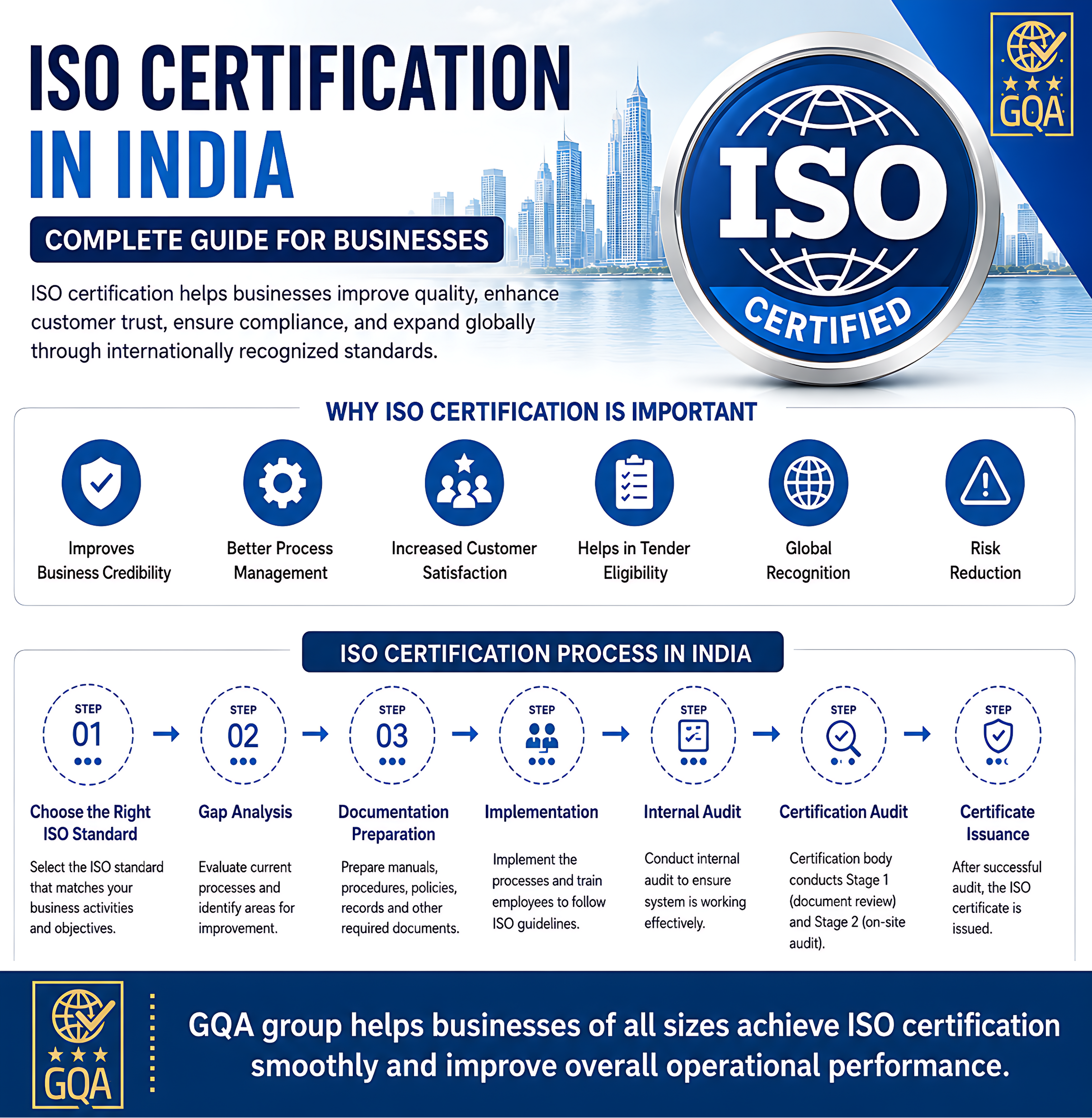
Here are some major benefits of ISO certification:
1. Improves Business Credibility
ISO certification increases customer trust and strengthens brand reputation in the market.
2. Better Process Management
Businesses can standardize their operations, reduce errors, and improve productivity.
3. Increased Customer Satisfaction
ISO standards focus heavily on quality control and customer expectations.
4. Helps in Tender Eligibility
Many government and private tenders require ISO certification as a mandatory condition.
5. Global Recognition
ISO-certified companies can expand into international markets more easily.
6. Risk Reduction
ISO systems help organizations identify and manage operational risks effectively.
How to Get ISO Certification in India?
Many business owners ask, how to get ISO certification for their company. The process is straightforward when guided by an experienced consultant.
Below is the step-by-step process followed by most organizations.
ISO Certification Process in India
The ISO certification process in India generally includes the following stages:
1. Choose the Right ISO Standard
The first step is identifying which ISO standard matches your business activities and objectives.
For example:
- Manufacturing companies usually prefer ISO 9001.
- Food businesses may require ISO 22000.
- IT companies often choose ISO 27001.
2. Gap Analysis
A consultant evaluates your current business systems and identifies areas that need improvement according to ISO requirements.
3. Documentation Preparation
This stage includes preparing:
- Quality manuals
- Standard operating procedures
- Policies
- Process records
- Risk assessments
Good documentation is an essential part of ISO compliance.
4. Implementation
The company implements the required processes and trains employees to follow ISO guidelines in daily operations.
5. Internal Audit
Before the final certification audit, an internal audit is conducted to check whether the system is working properly.
6. Certification Audit
An accredited certification body conducts an official audit in two stages:
- Stage 1: Documentation review
- Stage 2: On-site implementation audit
7. Certificate Issuance
After successful completion of the audit, the organization receives the ISO certificate.
How to Get ISO Certification
Many businesses ask how to get ISO certification quickly and efficiently. The best approach is to work with experienced consultants who understand industry-specific requirements.
Basic Requirements to Get ISO Certification
- Proper business registration
- Process documentation
- Employee training
- Internal audits
- Compliance implementation
Working with professionals can simplify the certification journey and reduce delays.
How to Apply for ISO Certification
If you are wondering how to apply for ISO certification, the process is straightforward when handled properly.
Documents Required
Generally, businesses need:
- Company registration documents
- Scope of business activities
- Employee details
- Process documentation
- Quality manuals and procedures
Application Procedure
- Select the ISO standard
- Hire a consultant or certification body
- Submit required documentation
- Complete implementation
- Attend certification audit
- Receive certification
The process timeline may vary depending on company size and operational complexity.
ISO Certification Cost in India
One of the most common questions businesses ask is about ISO certification cost in India.
The cost of ISO certification is not fixed and depends on several important factors such as:
- Type of ISO standard required
- Size of the organization
- Number of employees
- Number of business locations
- Complexity of operations
- Documentation and implementation requirements
- Certification audit requirements
- Consultant support and advisory services by GQA Consultants
Each organization has a different structure, so the ISO certification cost in India is always customized based on business requirements rather than a standard fixed price.
In general, smaller businesses may have a simpler implementation process, while larger organizations with multiple departments and locations may require more detailed documentation, audits, and system setup.
Although ISO certification involves an investment, it provides long-term business benefits such as improved process efficiency, better customer trust, enhanced compliance, and increased business opportunities in both domestic and international markets.
For accurate assessment, proper guidance, and end-to-end support in the ISO certification process in India, businesses are advised to consult experienced professionals. Organizations like GQA Group provide structured consultation and help companies understand requirements clearly before starting the certification journey.
Why Hire an ISO Certification Consultant in India?
Choosing a professional ISO certification consultant in India can save time, reduce errors, and improve certification success rates.
Advantages of Hiring a Consultant
Expert Guidance
Consultants understand ISO standards and provide complete implementation support.
Faster Certification
Experienced professionals help avoid unnecessary delays during documentation and audits.
Proper Documentation
Consultants prepare all required documents according to ISO standards.
Audit Support
They help businesses prepare for internal and external audits.
A reliable consultant ensures smooth implementation and long-term compliance.
GQA Group provides end-to-end ISO consulting services for businesses across multiple industries in India.
Choose GQA Group for ISO Certification Services
If you are looking for professional ISO certification support, GQA Group provides complete ISO consulting and certification assistance for businesses across India.
Their services include:
- ISO implementation
- Documentation support
- Internal audits
- Training
- Certification coordination
- Compliance management
With expert guidance, businesses can complete the certification process efficiently and improve operational performance.
Industries That Need ISO Certification
ISO certification is beneficial for almost every industry, including:
- Manufacturing
- Construction
- Healthcare
- Education
- Food Processing
- Information Technology
- Logistics
- Pharmaceuticals
- Retail
- Service Industries
Both startups and large enterprises can benefit from implementing ISO standards.
Final Thoughts
ISO certification is more than just a certificate. It is a powerful business tool that improves quality, strengthens operational systems, enhances customer satisfaction, and creates new growth opportunities.
Whether you are a small business owner or a large organization, understanding what is ISO certification, the ISO certification process in India, and how to apply for ISO certification can help you make better business decisions.
By partnering with an experienced ISO certification consultant in India, companies can complete certification smoothly and achieve long-term business success.
For expert ISO consulting and certification support, visit GQA Group.
FAQs
1. What is ISO certification?
ISO certification is an official approval that a company follows international standards for quality, safety, and operational management.
2. How long does the ISO certification process take?
The duration depends on the size and complexity of the organization. Small businesses may complete the process within a few weeks, while larger companies may take longer.
3. What is the ISO certification cost in India?
The cost varies depending on the ISO standard, company size, number of employees, and certification requirements.
4. Can small businesses apply for ISO certification?
Yes, small businesses and startups can also apply for ISO certification and gain significant business advantages.
5. Why should I hire an ISO certification consultant in India?
An experienced consultant simplifies documentation, implementation, audits, and certification procedures, saving time and ensuring compliance.