

CBAM & THE AUTOMOTIVE INDUSTRY: IS YOUR SUPPLY CHAIN READY FOR THE CARBON BORDER?
The automotive industry is entering a new era where product quality, cost and delivery are no longer the only competitive factors.
Carbon emissions are becoming an important part of global trade competitiveness.
The European Union's Carbon Border Adjustment Mechanism (CBAM) entered its definitive phase on 1 January 2026.
For Indian automotive manufacturers and exporters, this brings an important need to understand and manage the carbon footprint of materials and manufacturing processes.
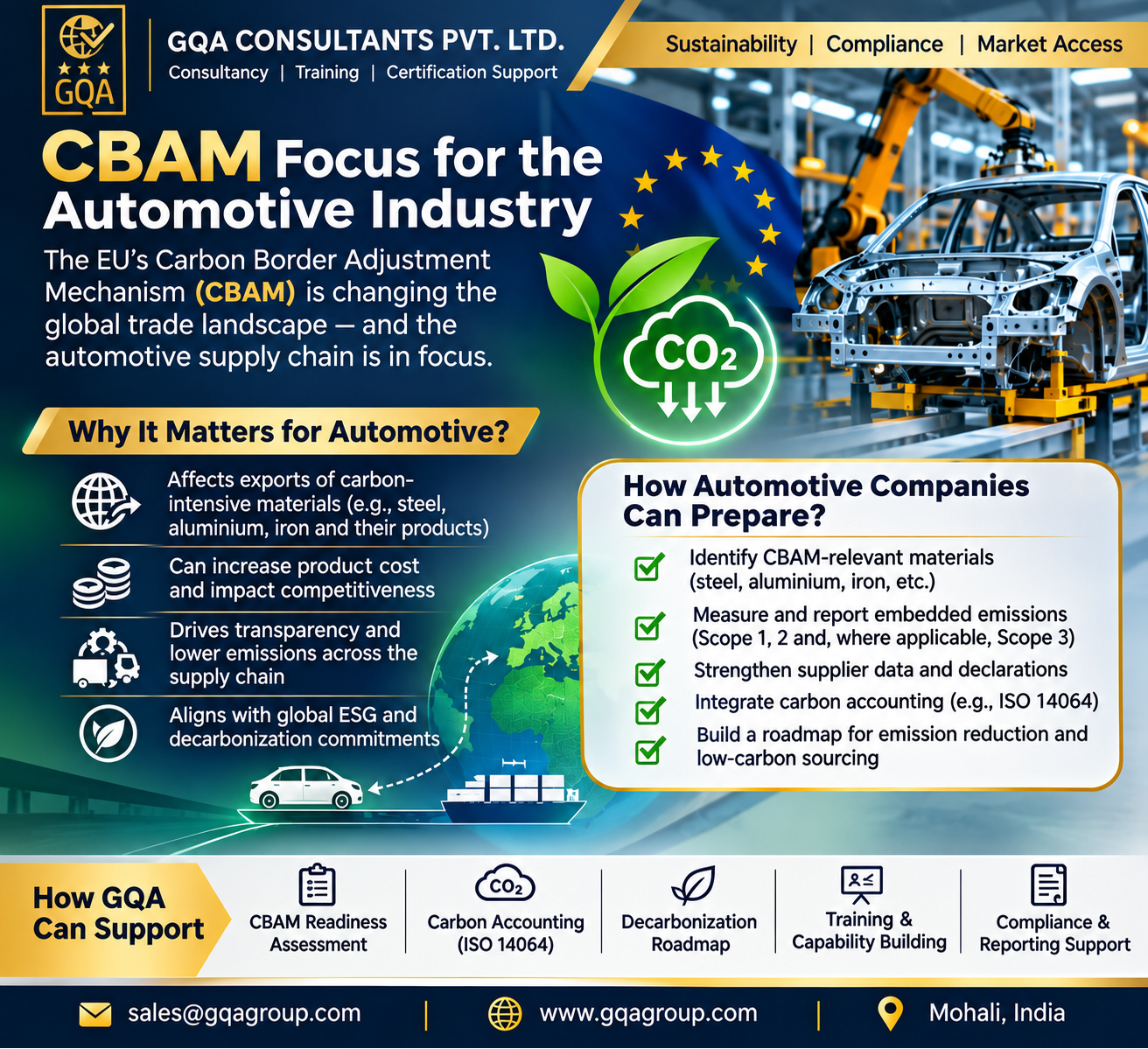
Why should the automotive industry pay attention?
🔹 Steel used in automotive bodies, chassis and structural components
🔹 Aluminium used in lightweight components, wheels and housings
🔹 Energy consumption in forging, casting, machining and heat treatment
🔹 Carbon emissions associated with raw materials and manufacturing
🔹 Traceability and environmental data across the supply chain
5 ACTIONS FOR AUTOMOTIVE MANUFACTURERS
1️⃣ Map steel and aluminium consumption across products and suppliers.
2️⃣ Calculate and monitor product-level embedded carbon emissions.
3️⃣ Develop reliable energy and greenhouse gas emission data.
4️⃣ Engage suppliers to improve carbon transparency and traceability.
5️⃣ Establish a structured carbon management and decarbonisation programme.
Important: CBAM currently covers specified iron and steel and aluminium goods, among other sectors. It does not automatically apply to every automobile or automotive component. Proposed downstream extensions make monitoring regulatory developments particularly important.
🌱 The future of automotive manufacturing will be driven by quality, innovation and carbon performance.