

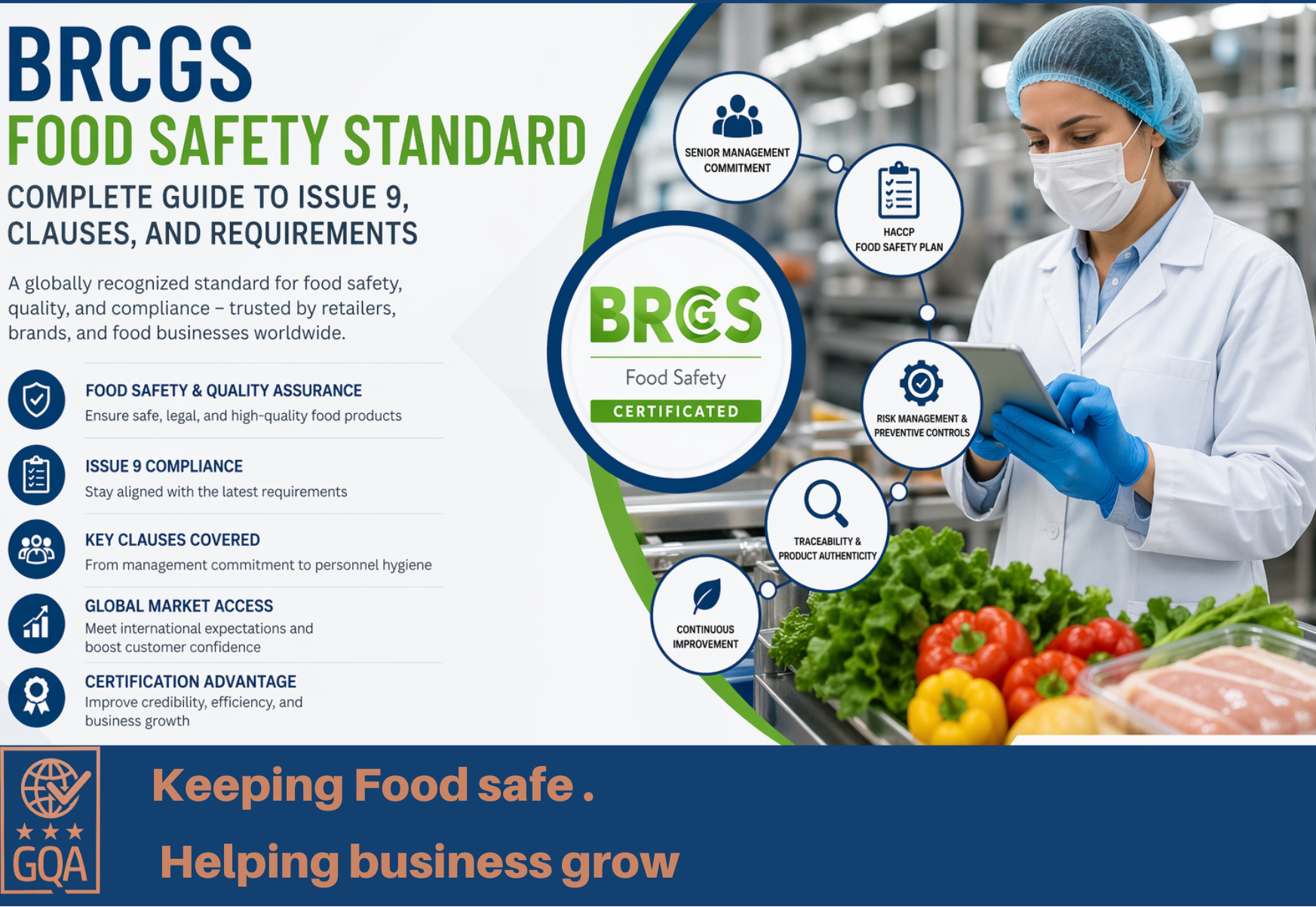
In today’s global food industry, safety, quality, and compliance are critical for success. Food manufacturers, processors, packers, and distributors must meet strict international standards to ensure product safety and maintain consumer trust.
One of the most widely recognized frameworks is the BRCGS Food Safety Standard, a globally accepted certification that helps businesses implement robust food safety management systems and meet international market expectations.
Whether you are supplying local retailers or exporting globally, achieving certification can significantly enhance your credibility, operational efficiency, and market access.
What Is the BRCGS Food Safety Standard?
The BRCGS Food Safety Standard is a globally recognized certification scheme designed for food manufacturers to ensure:
- Food safety
- Product quality
- Legal compliance
- Operational control
It provides a structured framework to identify risks, implement preventive controls, and maintain consistent product integrity.
The standard is benchmarked by the Global Food Safety Initiative (GFSI) and is widely accepted by retailers, brand owners, and certification bodies worldwide.
Understanding BRCGS Food Safety Standard Issue 9
The latest version, Issue 9, was introduced to address evolving food safety risks, regulatory expectations, and supply chain challenges.
Key Focus Areas in Issue 9:
- Stronger food safety culture and leadership involvement
- Enhanced product authenticity and traceability
- Improved environmental monitoring programs
- Greater emphasis on risk management and preventive controls
- Strengthened corrective action and root cause analysis
- Increased focus on supplier approval and monitoring
These updates ensure organizations remain aligned with modern industry expectations and global compliance requirements.
BRCGS Food Safety Standard Clauses Explained
The standard is structured into key clauses that cover all aspects of food safety and quality management:
1. Senior Management Commitment
Leadership must actively support the food safety system, allocate resources, and promote a strong food safety culture.
2. Food Safety Plan (HACCP)
A science-based Hazard Analysis and Critical Control Point (HACCP) plan must be developed and maintained to identify and control hazards.
3. Food Safety and Quality Management System
Includes:
- Documentation and record control
- Internal audits
- Supplier approval
- Corrective actions
- Traceability systems
4. Site Standards
Focuses on:
- Facility layout and maintenance
- Cleaning and housekeeping
- Pest control
- Waste management
- Security
5. Product Control
Covers:
- Allergen management
- Product testing
- Labeling and packaging
- Product release procedures
6. Process Control
Ensures manufacturing processes are controlled, monitored, and consistently deliver safe products.
7. Personnel
Addresses:
- Employee hygiene
- Training and competency
- Protective clothing
- Health monitoring
Key BRCGS Food Safety Standard Requirements
To achieve certification, organizations must implement a comprehensive food safety management system, including:
- Documented food safety policies and procedures
- HACCP-based risk management system
- Supplier approval and monitoring program
- Product traceability and recall procedures
- Internal audits and management reviews
- Staff training and competency evaluation
- Allergen and contamination control measures
- Corrective and preventive action systems
- Environmental monitoring programs
- Continuous improvement processes
Meeting these requirements ensures consistent production of safe, legal, and high-quality food products.
Benefits of BRCGS Food Safety Standard Certification
Implementing the BRCGS Food Safety Standard offers significant advantages:
Enhanced Market Access
Many global retailers and brands require BRCGS certification from suppliers.
Improved Food Safety Performance
Stronger hazard control and risk management systems reduce incidents and recalls.
Increased Customer Confidence
Certification demonstrates commitment to safety and quality.
Operational Efficiency
Standardized processes improve consistency and reduce waste.
Regulatory Compliance
Helps align with national and international food safety regulations.
Competitive Advantage
Certified businesses gain credibility and stand out in competitive markets.
How GQA Group Can Help
Implementing the BRCGS Food Safety Standard can be complex, especially for first-time certification.
GQA Group provides:
- Gap assessments
- Implementation support
- Training and awareness programs
- Internal audit assistance
- Certification guidance
Their experienced consultants help organizations understand requirements, prepare for audits, and achieve certification efficiently.
Conclusion
The BRCGS Food Safety Standard is more than a certification it is a globally recognized benchmark for food safety excellence.
By understanding its clauses, implementing its requirements, and adopting the latest updates in Issue 9, organizations can:
- Improve food safety performance
- Strengthen brand reputation
- Ensure regulatory compliance
- Expand into global markets
With expert guidance from GQA Group, your certification journey can be smooth, efficient, and highly successful.
Frequently Asked Questions (FAQs)
1. What is the BRCGS Food Safety Standard?
It is a globally recognized certification framework for food manufacturers to ensure food safety, quality, and legal compliance.
2. What is new in Issue 9?
Issue 9 emphasizes food safety culture, environmental monitoring, traceability, supplier management, and corrective action processes.
3. Who should get certified?
Food manufacturers, processors, packers, and companies supplying retailers or export markets.
4. What are the main requirements?
HACCP implementation, documented systems, supplier approval, traceability, internal audits, and staff training.
5. How can GQA Group help?
GQA Group provides consulting, training, gap analysis, and certification support to help businesses achieve compliance efficiently.